



History of Asanteman – Founder of the Asante Nation
Nana Osei Tutu I (King of Asante, 1695-1731)
The history of the Asante Nation (Asanteman) is inseparably linked to its legendary founder, Nana Osei Tutu I, the first Asantehene (King of Asante) who reigned from 1695 to 1731. revered across Ghana and the Ghanaian diaspora, Nana Osei Tutu I is remembered as the visionary leader who transformed loosely connected clans and chiefdoms into a united and powerful kingdom — the foundation of modern Asanteman in present-day Ghana, West Africa.
Before his reign, the Akan forest states existed as fragmented independent communities ruled by various chiefs. Through unmatched wisdom, diplomatic skill, and military leadership, Nana Osei Tutu I successfully united these neighboring tribes, clans, towns, and villages into one cohesive nation under centralized rule. He established Kumasi as the capital of the Asante Kingdom, making it the political, cultural, and spiritual heart of the growing empire.
Before his reign, the Akan forest states existed as fragmented independent communities ruled by various chiefs. Through unmatched wisdom, diplomatic skill, and military leadership, Nana Osei Tutu I successfully united these neighboring tribes, clans, towns, and villages into one cohesive nation under centralized rule. He established Kumasi as the capital of the Asante Kingdom, making it the political, cultural, and spiritual heart of the growing empire.
His leadership reshaped the course of West African history. Nana Osei Tutu I introduced a constitutional system of governance that fostered unity, loyalty, and cooperation among the various states of Asanteman. This revolutionary political structure enabled the Asante Kingdom to maintain stability and strength for over two and a half centuries, making it one of the most prominent and enduring kingdoms in African history.
The Golden Stool and the Birth of the Asante Kingdom
Central to the founding of the Asante Nation is the sacred story of the Golden Stool (Sika Dwa Kofi). According to Asante tradition, the spiritual leader and renowned priest Okomfo Anokye, close advisor to Nana Osei Tutu I, called down the Golden Stool from the heavens during a historic gathering of Akan chiefs. The stool descended and rested upon the lap of Nana Osei Tutu I, symbolizing divine approval of his kingship and unity of the Asante people.
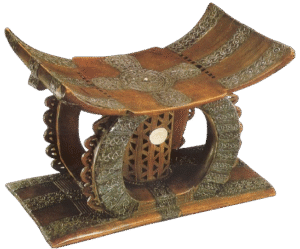
The Golden Stool became the supreme spiritual symbol of the Asante Nation — representing the soul of the people and standing above all other stools of authority. It remains to this day the most sacred national emblem of Asanteman, revered by Asante people across the world.
Leadership, Legacy, and National Unity
Nana Osei Tutu I ruled with fairness, generosity, and strength. Though the population and territory of Asanteman expanded significantly during his reign — tripling in size — he governed with impartial justice that earned him deep respect and loyalty from his people. His dedication and ability to unify diverse communities made him one of the most celebrated leaders in African history.
Because of his lasting impact, the official stool of the Asantehene is widely referred to as “Osei Tutu Akondwa” (Osei Tutu’s Stool), also known traditionally as the Osei or Opoku Stool, honoring his role as the ultimate unifier of Asanteman.
A widely traveled ruler with an open mind, Nana Osei Tutu I adopted and adapted institutions from neighboring societies to strengthen the structure of the Asante state. His innovation, resilience, and determination earned him the honorary title “Opemsuo”, meaning “He Who Strives” — a reflection of his tireless commitment to building a great nation.
Final Journey and Immortal Honor
According to prophecy delivered earlier by Okomfo Anokye, Nana Osei Tutu I was not destined to die in Kumasi. When illness overtook him, the king joined the Asante army on a military campaign against Akyem. It was there that he passed away while on the battlefield.
Legend recounts that his body, placed in a coffin and transported alongside the advancing army, endured repeated gunfire during battle. The coffin remained unbroken, earning Nana Osei Tutu I his famous praise-title: “Adaka Gye Abɔ” — “The Coffin That Shielded Bullets.”
This title immortalizes his bravery and unwavering devotion to the Asante Nation — even in death.
Nana Osei Tutu I Today
To this day, Nana Osei Tutu I remains a towering symbol of unity, leadership, heritage, and nation-building. His vision laid the foundation for Asanteman’s cultural pride and enduring identity. His story continues to inspire Ghanaians and the global diaspora, including organizations such as the Asanteman Association of Chicago & Midwest (AACM), which uphold the legacy of Asante traditions and promote cultural preservation worldwide.